
Performance Review Examples, Phrases and Questions for Managers
Performance review examples for each rating, phrases for strengths and problems, questions to ask in the meeting, and a simple way to write each review in about an hour.







Leaders often find themselves expressing a common sentiment: “I just need to get better at managing my time.” or “If I just had a few more hours in the day, I could get everything done.”
At first glance, these statements seem reasonable. Time is a finite resource, and the responsibilities that come with leadership roles are undeniably demanding. Leaders juggle various tasks, from strategic planning to team management, often under significant pressure. However, when we closely examine how these leaders allocate their time, a more complex picture emerges. Their schedules are often crammed with:
When we analyze these factors, it becomes clear that the issues at play are not merely about poor time management. Instead, they point to deeper systemic problems within the organization. The way time is consumed is symptomatic of larger issues, such as ineffective communication channels, unclear roles, and a lack of empowerment among team members. Addressing these systemic issues requires a thoughtful approach that goes beyond simply trying to squeeze more tasks into an already packed schedule. It necessitates reevaluating how teams are structured, how decisions are made, and how communication flows within the organization to foster a more efficient and productive work environment.
To be fair, time management does play a crucial role in enhancing productivity and ensuring tasks are completed efficiently. However, no amount of meticulously planned calendar blocking, the latest productivity applications, or trendy “focus hacks” will remedy an environment where the foundational elements of organizational structure are fundamentally flawed. If any of the following issues resonate with your experience, it becomes clear that the problem isn’t merely about managing time effectively; it lies in the very structure of the organization itself:
When these gaps exist, leaders don’t simply become busy; they become trapped in a cycle of constant firefighting and crisis management. Instead of focusing on strategic initiatives that drive growth, they are mired in day-to-day operations, reacting to issues rather than proactively addressing root causes. This situation can lead to a toxic work environment where morale is low, and the potential for innovation is stifled. To break free from this cycle, organizations must address these structural issues head-on, creating a foundation that allows for effective time management and, ultimately, greater success.
Over time, something even more concerning happens: firefighting becomes normalized within the organizational culture. Leaders, who initially respond to crises with urgency, gradually become so accustomed to reacting to recurring problems that they stop questioning why these issues keep resurfacing. This behavior creates a detrimental cycle where, instead of stepping back to analyze root causes, they remain entrenched in a reactive mode, managing symptoms without addressing core issues. It starts to feel like:
However, “later” rarely comes. Procrastinating on addressing systemic issues can lead to a perpetual cycle of crisis management that stifles innovation and growth. As time progresses, the longer this pattern continues, the more your organization becomes dependent on you—not as a visionary leader guiding your team towards success, but as a bottleneck hindering progress. This dependency can create a toxic environment where team members feel overwhelmed and disempowered, waiting for you to resolve every issue rather than taking initiative themselves.
Some leaders even start to crave firefighting instead of wanting to solve it. The adrenaline rush associated with resolving crises can become addictive. The constant state of urgency may provide a false sense of purpose, leading them to believe their value is tied to their ability to put out fires rather than fostering a proactive and sustainable organizational culture. This mindset can ultimately hinder the development of effective systems and processes, resulting in a continuous loop of chaos detrimental to the organization's long-term health and success.
In this environment, the focus shifts away from strategic planning and long-term vision, as immediate concerns take precedence. Teams may become demoralized, feeling their efforts are futile when the same problems arise repeatedly without resolution. Consequently, innovation suffers, as employees become more focused on survival than improvement or creativity. To break this cycle, leaders must recognize the importance of stepping back, assessing the situation critically, and implementing lasting solutions that address the root causes of recurring issues. Only then can they transform from being mere firefighters to effective leaders who cultivate a resilient and forward-thinking organization.
If you’re ready to move from reactive to strategic, the shift starts with awareness and intentional redesign. Here are five practical ways to start:
Strong leaders excel not by managing chaos, but by creating stable, productive environments. They focus on preventing crises through proactive strategies, anticipating challenges before they arise. Their goal is to build systems that reduce crisis likelihood, understanding and addressing factors that lead to chaos. This involves fostering efficiency, clarity, and collaboration within teams.
Leaders also cultivate open communication and trust, empowering team members to voice concerns and suggest improvements. This enhances problem-solving and fosters ownership and accountability. Effective leaders prioritize training, equipping teams with skills to handle challenges independently. This approach builds a resilient workforce capable of adapting to change without chaos.
In summary, strong leadership involves creating environments where chaos is rare, focusing on prevention and empowerment. By encouraging collaboration and investing in development, leaders ensure organizational resilience and confidence in facing future challenges.
Reflection Question: What’s one issue on your team that keeps showing up no matter how many times it gets “fixed”?
Performance review examples for each rating, phrases for strengths and problems, questions to ask in the meeting, and a simple way to write each review in about an hour.
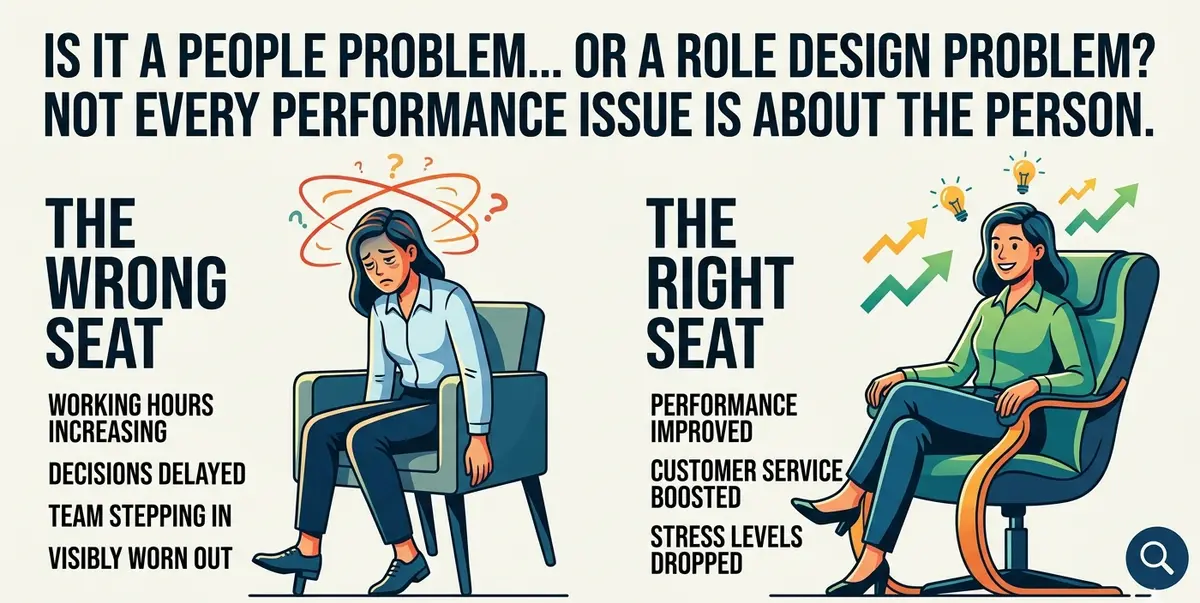
Right person, wrong seat? How to tell a performance problem from an org design problem before you blame the employee.

Why boutique HR consulting, tailored to one business at a time, beats one-size-fits-all HR packages for small companies.
HR Fit Check
Tell me a little about your team and I'll point you to the service that fits your business and the way of working together that suits you.
Take the Fit Check