
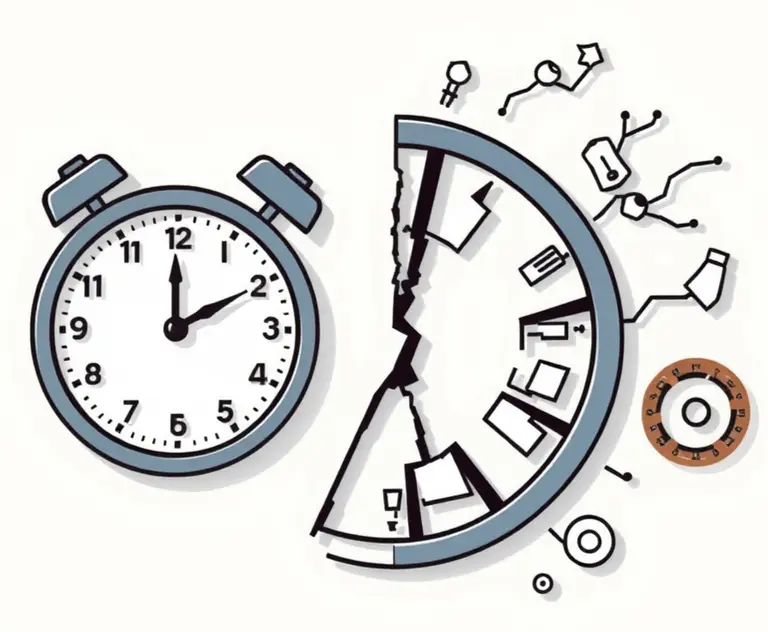
Stop Blaming Time Management: HR Process Improvement Ends the Firefighting
Constant firefighting usually isn't a time management problem. It's a process problem, and HR process improvement is how you fix it.






Review season tends to land on an owner's desk all at once, with a stack of forms, a calendar full of meetings and a sense that last year's reviews didn't change much. If you're the one writing them, you probably want wording that's honest without being harsh and a process that doesn't eat a week of your time.
Below are performance review examples for each rating, phrases for strengths and for problems, the questions worth asking in the meeting, and a simple way to write each review in under an hour. I wrote it for owners and managers of small teams. Treat every example as a starting point and put it in your own words, with real details from your team member's year.
Most small businesses do fine with a three-level performance rating scale: exceeds expectations, meets expectations and needs improvement. Five levels can look more precise, although it's hard to explain the difference between two neighboring levels to the person sitting across from you, and it's easy for everyone to end up in the middle. Whatever scale you use, write down what each level means for each role before anyone gets rated, so "meets expectations" means the same thing for your front desk as it does for your crew leads.
I made up the three examples below for an office coordinator, a bookkeeper and a sales rep at a small service business, so swap in your own details. Each one follows the same pattern: what happened, why it mattered and what comes next.
"Maria took over scheduling for both crews in March, and by summer double-bookings had almost stopped. When the scheduling software changed in August, she learned it first and walked the rest of the office through it. Customers noticed the difference, and so did the crews. Next year I'd like her to take on the paperwork for new hires, and I'll set aside time each month to help her learn it."
"Jordan handles invoicing accurately and on time, and customers often mention how easy he is to reach. His work this year was steady and reliable, which is exactly what this role needs. One area to grow is follow-up on overdue accounts, which sometimes waits until the end of the month. For the next six months, the goal is a reminder to the customer within a week of any missed payment."
"Sam knows the services well, and customers like working with him. However, he missed four of the last ten order deadlines, and two of those orders had to be redone at the company's cost. Meeting deadlines is a core part of this role. Over the next quarter, every order needs to be entered by the cutoff, and Sam and I will meet every other Friday to check progress and clear anything that's getting in the way."
The needs-improvement example names the result, the impact and the expectation, and it offers help, without calling Sam careless or saying he has a bad attitude. If a problem is serious, ongoing or already discussed more than once, the annual review isn't the place to raise it for the first time, and it usually calls for a separate conversation and, sometimes, a formal improvement plan.
Good performance review phrases are specific enough that the team member knows what to keep doing or what to change. A phrase like "great attitude" feels nice to write and tells the person very little. Finish each phrase below with a real example from the year, since the example is what tells the person what you mean.
Filled in, those frames sound like this. I made these up and sorted them by skill area, so change the details to fit the person.
The same skill areas from the other side, also made up, each name what happened and what you need instead.
A few words cause more trouble than they're worth. "Always" and "never" invite an argument about the one time it wasn't true, and labels like "lazy", "negative" or "not a team player" describe the person instead of the work. Comments about someone's age, health, family or personal life don't belong in a performance evaluation at all. Stick to what they did, what it affected and what you need next.
A performance review meeting goes better when the team member does at least half the talking. Send two or three of these performance review questions a few days ahead, so people have time to think instead of answering on the spot.
Don't skip the job description question. Roles drift as a business grows, and sometimes what looks like a performance problem is a job that has changed around the person doing it. If the answers in a review point that way, it's worth looking at the role before you look at the person.
My honest answer is the one my clients are probably tired of hearing: it depends on the business. Here is what each rhythm is good for, so you can pick the one that fits your team.
Whichever you pick, the formal review shouldn't be the only time someone hears how they're doing. Nothing in a review should be news to the person, and if it is, the feedback came too late.
When reviews are tied to pay, the process has to be clear. One client of mine was struggling to get qualified applicants and didn't offer any advancement in pay after hire. Along with competitive pay ranges for all of their positions, I helped them create an annual review process that was clear and measurable and allowed for pay increases that were fair and consistent for everyone. It led to easier hiring and better retention.
If more than one manager writes reviews, hold a short calibration meeting before any of them go out. The managers put their ratings side by side and talk through any that look out of line, so a "meets expectations" from one manager means the same thing as it does from another.
If you're wondering how to write a performance review without losing a weekend, most of the work happens before you start writing. This performance review process takes a little under an hour per person:
Use these examples as a starting point. I don't do templates or cookie-cutter in the sense of using one template for all of my clients, because a review form works best when it's customized to your business and your positions. Performance reviews are also one of the topics in my manager compliance training, alongside documentation and corrective actions.
Through Training & Development, I can help you build a performance review system that fits your team and train your managers to run it, and I absolutely do follow-ups and check-ins afterwards. When the training is on giving effective feedback, those follow-ups look at things the owner now notices, any impact on team member performance and examples of what the manager is now doing. If your reviews feel like a chore that nobody gets much out of, contact me to book a consultation.
For most roles, plan on half an hour to an hour. That's enough time for the team member to share their side, for you to walk through the written review and for the two of you to agree on goals. If you're doing quarterly reviews, a shorter conversation is usually plenty.
They can be, as long as the link is clear. If pay increases come out of the review, the team member should know ahead of time what the ratings are based on and how a rating connects to a raise, so the process feels fair and consistent for everyone. Some owners prefer to hold the pay conversation separately, so the review stays focused on growth.
I'd recommend it. A written review gives you and the team member the same record of what was said, what's expected and what the goals are, and it makes next year's review much easier to write. It doesn't have to be long, and a single page per person is often enough.
Listen first, and ask for specifics. If they bring facts you didn't have, be willing to change the review. If you still disagree, let them add their own written comments to it, and agree on what happens next. A disagreement handled calmly often builds more trust than a review everyone nods through.
You can use the same core questions for everyone, such as what went well, what got in the way and what the goals are for next year. The expectations, though, should be specific to each role, because what "meets expectations" looks like for a crew lead isn't the same as for your bookkeeper.
Constant firefighting usually isn't a time management problem. It's a process problem, and HR process improvement is how you fix it.
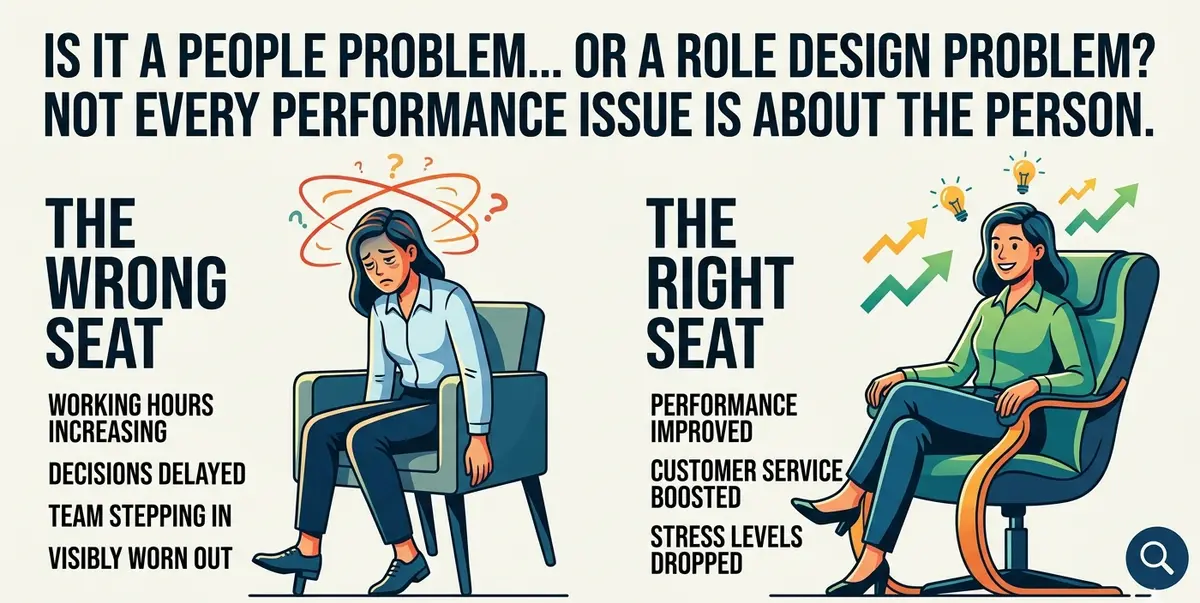
Right person, wrong seat? How to tell a performance problem from an org design problem before you blame the employee.

Why boutique HR consulting, tailored to one business at a time, beats one-size-fits-all HR packages for small companies.
HR Fit Check
Tell me a little about your team and I'll point you to the service that fits your business and the way of working together that suits you.
Take the Fit Check